

Can We Call Cloud Formation Template Into Other Cloud Formation Template
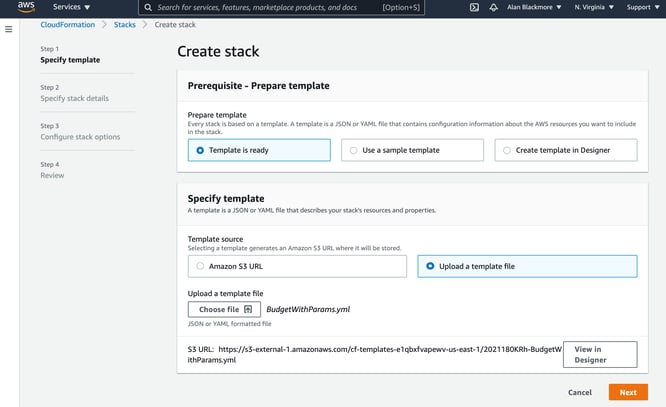
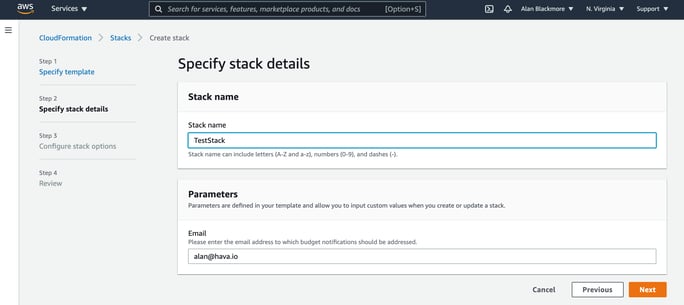
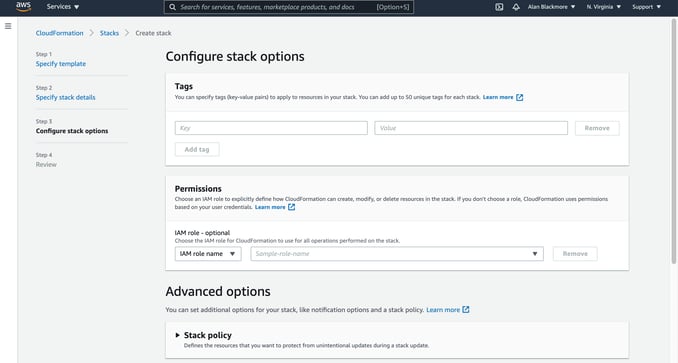
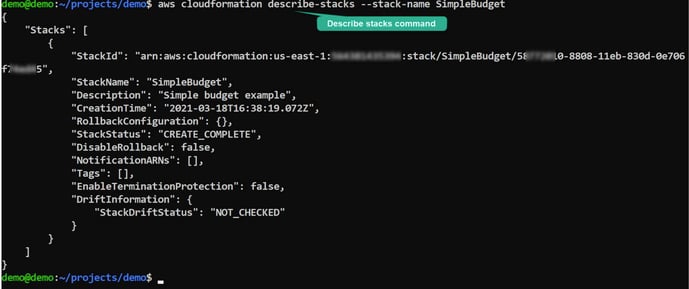
CloudFormation is a method of provisioning AWS infrastructure using code. Information technology allows you to model a drove of related resources, both AWS and third party, to provision them chop-chop and consistently. AWS CloudFormation also provides yous with a mechanism to manage the resources through their lifecycle. CloudFormation is designed to help you lot manage your AWS resources, especially associated resources. You can apply CloudFormation to group resources with dependencies into stacks using templates. CloudFormation works by defining your AWS resource in a structured text file in either JSON or YAML formats. This is known as a CloudFormation template. Using the template, you so create a CloudFormation stack in AWS which contains all the resources you divers. To manage your resources yous amend your CloudFormation template and update it, which volition execute the changes to the resources in your stack. When y'all make changes, CloudFormation tracks the template and executes the changes or optionally creates a "Change Set" for approving. Best Practice Automation With CloudFormation you can integrate with DevOps and GitOps best practices like establishing a Git repository and deploying infrastructure through a CI/CD pipeline. This allows you to inspect changes and trigger deployments using pipeline integration tools like AWS CodePipeline and GitHub Deportment. Global Scaling and Deployment Templates help simplify scaling in that you lot tin employ best practices and company policy requirements within your templates that tin can then be used in CloudFormation StackSets to create, update and delete stacks beyond multiple AWS regions and accounts. AWS Service Integration CloudFormation meshes in with many other AWS services to automate resource and security management. CloudFormation will integrate with AWS Identity and Admission Management (IAM) for secure access control, AWS Config for best practice compliance and builder tools like AWS CodePipeline to implement the latest DevOps best practices for improving automation, testing and deployment. Manage individual and third party resources You can provision and manage 3rd party resources similar monitoring, CI/CD and version command using the open source CloudFormation CLI to build your ain resource providers. Managing your Infrastructure using lawmaking. With CloudFormation you tin manage all your infrastructure using code. Infrastructure management can be approached as if information technology were application code. Different users can create CloudFormation templates and submit them to your code repository for review. Once approved, the template can be merged into your chief branch. Merging to your main co-operative initiates the build procedure that will create your new AWS resources. Toll reduction at the development phase. If you are working on proof of concept or learning new services or resource types, CloudFormation allows you lot to quickly spin up or destroy a stack of related resources. This ways you tin spin up a grouping of resources for development and testing, but easily destroy them when they are non in employ. As you lot move into production, you can quickly deploy from your templates and calibration up as needed. Disaster Recovery If you have a catastrophic infrastructure failure you can easily recreate your infrastructure in a unlike region or account from your CloudFormation templates quickly to assist in the disaster recovery process. At that place are a number of other considerations when adopting CloudFormation to manage your AWS infrastructure provisioning. While it is possible to create your Cloudformation stacks manually from the console, AWS recommends adopting a CI/CD pipeline so that code updates can exist better managed earlier merging to your principal branch to deploy infrastructure. Information technology is likewise important to avoid manual changes to your stack infrastructure when y'all are using CloudFormation. Always utilise your templates to update infrastructure otherwise changes made manually will most certainly be lost. CloudFormation is substantially free to employ. You only pay for the API calls CloudFormation makes on your behalf and the resources yous provision, which is no different than manually creating them. At that place is besides a small per operation charge if you are managing tertiary party resources. CloudFormation pricing details can be found here Basically whatsoever AWS resources you tin create from the AWS console can exist provisioned within a CloudFormation template. This includes things like Templates are constructed of structured text. The declarations in your CloudFormation stack templates are written in JSON or YAML formats. A stack is a drove of AWS resources provisioned by a template that you can manage as a single unit of measurement. A StackSet is a named set of stacks that use the aforementioned template that is used to provision resources across different accounts and regions. This enables a unmarried functioning to create, update or delete stacks across multiple regions and accounts. To create a CloudFormation stack from the AWS console follow the steps below. In this case we'll employ a sample YAML template provided by AWS. The showtime pace is to navigate to the CloudFormation Service on your Services console which can exist found nether "Direction and Governance" The offset step is to click on create stack: In this case we'll tell CloudFormation our template is ready and that we want to upload it. At this point you have the power to enter the location of a template stored in a S3 saucepan or you lot tin use a sample template for common stacks similar: On the side by side step you need to name your stack and complete any parameters that were defined in the template. In this budget instance, we accept an e-mail parameter that will receive the upkeep notifications. In the adjacent step you can specify upwards to 50 tag cardinal/value pairs that will be attached to all the resources created when you create your stack. You can nominate an IAM role to use for the stack. If you lot practice non specify a function, then the permissions will be based on the user credentials being used to create the stack. There are besides some advanced options: Stack Policy: This is a JSON certificate that defines the update actions that tin be performed on nominated resources. This allows y'all to protect resources from unintentional updates during a stack update. Rollback Configuration: This allows you to specify a CloudWatch alarm and time flow to monitor CloudFormation when creating or updating a stack. If the operation breaches an alarm threshold, the update functioning is rolled back. Notification Options: Hither, you tin specify a SNS topic ARN to send notifications to. Stack Creation Options: Here, you lot tin can specify whether to whorl back on failure, specify a stack creation timeout menses and set the stack termination protection. If the termination protection is enabled, your stack cannot be deleted until you update the setting via stack deportment. The terminal step is a review page that allows you to review and amend the options before selecting the "Create Stack" This will start creating the stack and study back the status of each upshot every bit it is performed. One time complete all your resources will show a condition of "CREATE_COMPLETE" If y'all have the AWS command line interface installed and configured, you can use the CLI to create a stack using the "create-stack" command. The command will crave you lot to supply a stack name and a template which tin can be hosted on S3 or be a file locally on your reckoner. The "describe-stacks" command entered in the CLI will return basic information about your stacks. CloudFormation templates can become big and complex. This is an case of the sample template provided by AWS to create a Wordpress installation with a MySQL database to handle the storage. And then that's a very brief glimpse at what CloudFormation is and what information technology does, however we accept barely scratched the surface of this widely used AWS service. Whatever you are building with AWS (with or without CloudFormation) you tin can visualise the end result of your network topology by connecting your AWS account to Hava. Hava polls your AWS configuration and creates a network topology diagram for every VPC discovered. Once the diagram is created, Hava polls your config and automatically updates the diagram, placing the superseded diagrams into a fully interactive version history. To open up a complimentary account to evaluate Hava using Demo information, have a gratis 14 day trial of all the paid plans or to spring direct in and start importing and visualizing your AWS, Azure and GCP environments, click the button below. Read next: What is Amazon Aurora
What is AWS Cloudformation?
The major benefits of CloudFormation include:
How much does CloudFormation price?
What Resources can you lot provision with CloudFormation?
What language are CloudFormation templates written in?
What is a CloudFormation Stack?
What is a CloudFormation StackSet?
How to Create CloudFormation Stacks from the AWS Console
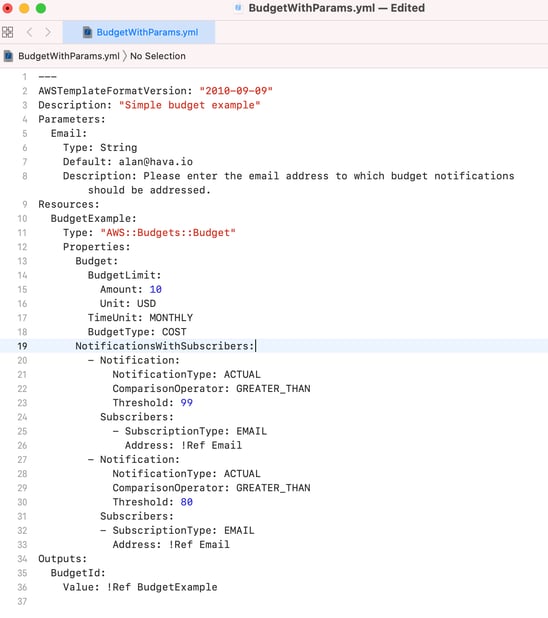
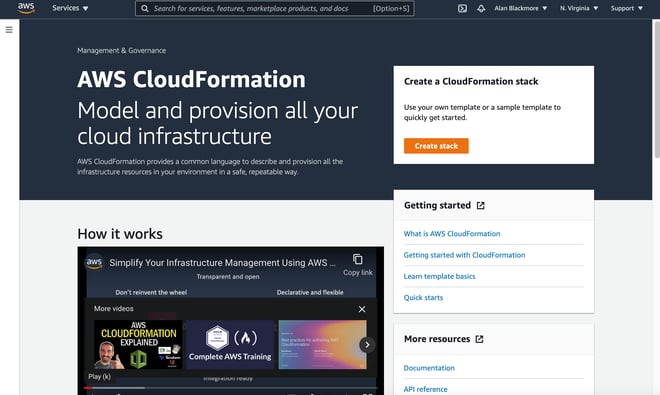
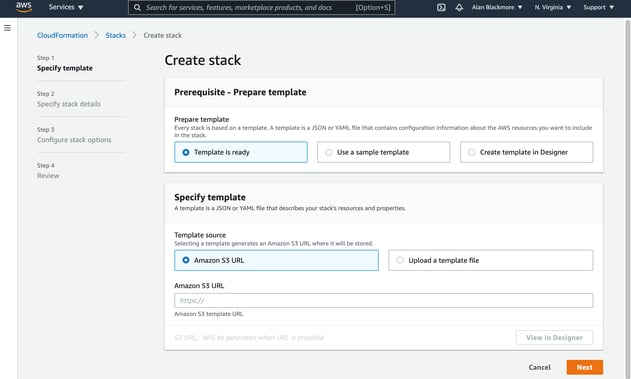
Create Cloud Germination Stacks from the AWS CLI

AWSTemplateFormatVersion: 2010-09-09 Clarification: >- AWS CloudFormation Sample Template WordPress_Single_Instance: WordPress is web software you can use to create a beautiful website or blog. This template installs WordPress with a local MySQL database for storage. It demonstrates using the AWS CloudFormation bootstrap scripts to deploy WordPress. **WARNING** This template creates an Amazon EC2 instance. Yous will be billed for the AWS resources used if you create a stack from this template. Parameters: KeyName: Description: Name of an existing EC2 KeyPair to enable SSH access to the instances Blazon: 'AWS::EC2::KeyPair::KeyName' ConstraintDescription: must be the name of an existing EC2 KeyPair. InstanceType: Clarification: WebServer EC2 instance blazon Blazon: String Default: t2.modest AllowedValues: - t1.micro - t2.nano - t2.micro - t2.modest - t2.medium - t2.large - m1.pocket-size - m1.medium - m1.large - m1.xlarge - m2.xlarge - m2.2xlarge - m2.4xlarge - m3.medium - m3.large - m3.xlarge - m3.2xlarge - m4.large - m4.xlarge - m4.2xlarge - m4.4xlarge - m4.10xlarge - c1.medium - c1.xlarge - c3.large - c3.xlarge - c3.2xlarge - c3.4xlarge - c3.8xlarge - c4.large - c4.xlarge - c4.2xlarge - c4.4xlarge - c4.8xlarge - g2.2xlarge - g2.8xlarge - r3.large - r3.xlarge - r3.2xlarge - r3.4xlarge - r3.8xlarge - i2.xlarge - i2.2xlarge - i2.4xlarge - i2.8xlarge - d2.xlarge - d2.2xlarge - d2.4xlarge - d2.8xlarge - hi1.4xlarge - hs1.8xlarge - cr1.8xlarge - cc2.8xlarge - cg1.4xlarge ConstraintDescription: must be a valid EC2 instance type. SSHLocation: Description: The IP address range that can be used to SSH to the EC2 instances Type: Cord MinLength: '9' MaxLength: '18' Default: 0.0.0.0/0 AllowedPattern: '(\d{1,3})\.(\d{one,iii})\.(\d{1,3})\.(\d{1,3})/(\d{1,2})' ConstraintDescription: must exist a valid IP CIDR range of the form x.ten.x.x/x. DBName: Default: wordpressdb Description: The WordPress database proper name Type: Cord MinLength: '1' MaxLength: '64' AllowedPattern: '[a-zA-Z][a-zA-Z0-9]*' ConstraintDescription: must brainstorm with a letter and incorporate just alphanumeric characters. DBUser: NoEcho: 'truthful' Description: The WordPress database admin account username Type: String MinLength: '1' MaxLength: '16' AllowedPattern: '[a-zA-Z][a-zA-Z0-9]*' ConstraintDescription: must begin with a letter and contain only alphanumeric characters. DBPassword: NoEcho: 'true' Description: The WordPress database admin account password Type: Cord MinLength: '8' MaxLength: '41' AllowedPattern: '[a-zA-Z0-9]*' ConstraintDescription: must comprise just alphanumeric characters. DBRootPassword: NoEcho: 'true' Description: MySQL root password Type: Cord MinLength: 'eight' MaxLength: '41' AllowedPattern: '[a-zA-Z0-ix]*' ConstraintDescription: must contain only alphanumeric characters. Mappings: AWSInstanceType2Arch: t1.micro: Arch: HVM64 t2.nano: Arch: HVM64 t2.micro: Arch: HVM64 t2.pocket-size: Arch: HVM64 t2.medium: Arch: HVM64 t2.large: Arch: HVM64 m1.small: Arch: HVM64 m1.medium: Arch: HVM64 m1.large: Arch: HVM64 m1.xlarge: Arch: HVM64 m2.xlarge: Arch: HVM64 m2.2xlarge: Curvation: HVM64 m2.4xlarge: Curvation: HVM64 m3.medium: Arch: HVM64 m3.large: Arch: HVM64 m3.xlarge: Arch: HVM64 m3.2xlarge: Arch: HVM64 m4.large: Arch: HVM64 m4.xlarge: Arch: HVM64 m4.2xlarge: Arch: HVM64 m4.4xlarge: Curvation: HVM64 m4.10xlarge: Arch: HVM64 c1.medium: Arch: HVM64 c1.xlarge: Arch: HVM64 c3.large: Arch: HVM64 c3.xlarge: Arch: HVM64 c3.2xlarge: Arch: HVM64 c3.4xlarge: Arch: HVM64 c3.8xlarge: Arch: HVM64 c4.large: Arch: HVM64 c4.xlarge: Curvation: HVM64 c4.2xlarge: Curvation: HVM64 c4.4xlarge: Arch: HVM64 c4.8xlarge: Arch: HVM64 g2.2xlarge: Arch: HVMG2 g2.8xlarge: Arch: HVMG2 r3.big: Arch: HVM64 r3.xlarge: Curvation: HVM64 r3.2xlarge: Arch: HVM64 r3.4xlarge: Arch: HVM64 r3.8xlarge: Arch: HVM64 i2.xlarge: Arch: HVM64 i2.2xlarge: Curvation: HVM64 i2.4xlarge: Arch: HVM64 i2.8xlarge: Arch: HVM64 d2.xlarge: Arch: HVM64 d2.2xlarge: Arch: HVM64 d2.4xlarge: Arch: HVM64 d2.8xlarge: Arch: HVM64 hi1.4xlarge: Curvation: HVM64 hs1.8xlarge: Arch: HVM64 cr1.8xlarge: Arch: HVM64 cc2.8xlarge: Arch: HVM64 AWSInstanceType2NATArch: t1.micro: Curvation: NATHVM64 t2.nano: Curvation: NATHVM64 t2.micro: Curvation: NATHVM64 t2.small: Arch: NATHVM64 t2.medium: Arch: NATHVM64 t2.large: Arch: NATHVM64 m1.small: Arch: NATHVM64 m1.medium: Curvation: NATHVM64 m1.large: Curvation: NATHVM64 m1.xlarge: Arch: NATHVM64 m2.xlarge: Curvation: NATHVM64 m2.2xlarge: Arch: NATHVM64 m2.4xlarge: Arch: NATHVM64 m3.medium: Arch: NATHVM64 m3.big: Curvation: NATHVM64 m3.xlarge: Curvation: NATHVM64 m3.2xlarge: Arch: NATHVM64 m4.big: Arch: NATHVM64 m4.xlarge: Arch: NATHVM64 m4.2xlarge: Curvation: NATHVM64 m4.4xlarge: Arch: NATHVM64 m4.10xlarge: Arch: NATHVM64 c1.medium: Arch: NATHVM64 c1.xlarge: Curvation: NATHVM64 c3.large: Curvation: NATHVM64 c3.xlarge: Arch: NATHVM64 c3.2xlarge: Arch: NATHVM64 c3.4xlarge: Curvation: NATHVM64 c3.8xlarge: Arch: NATHVM64 c4.large: Curvation: NATHVM64 c4.xlarge: Arch: NATHVM64 c4.2xlarge: Arch: NATHVM64 c4.4xlarge: Arch: NATHVM64 c4.8xlarge: Arch: NATHVM64 g2.2xlarge: Curvation: NATHVMG2 g2.8xlarge: Arch: NATHVMG2 r3.large: Curvation: NATHVM64 r3.xlarge: Arch: NATHVM64 r3.2xlarge: Curvation: NATHVM64 r3.4xlarge: Curvation: NATHVM64 r3.8xlarge: Curvation: NATHVM64 i2.xlarge: Arch: NATHVM64 i2.2xlarge: Arch: NATHVM64 i2.4xlarge: Curvation: NATHVM64 i2.8xlarge: Arch: NATHVM64 d2.xlarge: Arch: NATHVM64 d2.2xlarge: Curvation: NATHVM64 d2.4xlarge: Curvation: NATHVM64 d2.8xlarge: Arch: NATHVM64 hi1.4xlarge: Arch: NATHVM64 hs1.8xlarge: Curvation: NATHVM64 cr1.8xlarge: Curvation: NATHVM64 cc2.8xlarge: Arch: NATHVM64 AWSRegionArch2AMI: af-due south-ane: HVM64: ami-064cc455f8a1ef504 HVMG2: NOT_SUPPORTED ap-east-1: HVM64: ami-f85b1989 HVMG2: NOT_SUPPORTED ap-northeast-one: HVM64: ami-0b2c2a754d5b4da22 HVMG2: ami-09d0e0e099ecabba2 ap-northeast-ii: HVM64: ami-0493ab99920f410fc HVMG2: NOT_SUPPORTED ap-northeast-three: HVM64: ami-01344f6f63a4decc1 HVMG2: NOT_SUPPORTED ap-south-ane: HVM64: ami-03cfb5e1fb4fac428 HVMG2: ami-0244c1d42815af84a ap-southeast-one: HVM64: ami-0ba35dc9caf73d1c7 HVMG2: ami-0e46ce0d6a87dc979 ap-southeast-2: HVM64: ami-0ae99b503e8694028 HVMG2: ami-0c0ab057a101d8ff2 ca-primal-one: HVM64: ami-0803e21a2ec22f953 HVMG2: NOT_SUPPORTED cn-north-one: HVM64: ami-07a3f215cc90c889c HVMG2: NOT_SUPPORTED cn-northwest-ane: HVM64: ami-0a3b3b10f714a0ff4 HVMG2: NOT_SUPPORTED european union-central-1: HVM64: ami-0474863011a7d1541 HVMG2: ami-0aa1822e3eb913a11 eu-n-1: HVM64: ami-0de4b8910494dba0f HVMG2: ami-32d55b4c eu-s-i: HVM64: ami-08427144fe9ebdef6 HVMG2: NOT_SUPPORTED european union-west-1: HVM64: ami-015232c01a82b847b HVMG2: ami-0d5299b1c6112c3c7 european union-west-two: HVM64: ami-0765d48d7e15beb93 HVMG2: NOT_SUPPORTED eu-west-3: HVM64: ami-0caf07637eda19d9c HVMG2: NOT_SUPPORTED me-due south-1: HVM64: ami-0744743d80915b497 HVMG2: NOT_SUPPORTED sa-east-1: HVM64: ami-0a52e8a6018e92bb0 HVMG2: NOT_SUPPORTED us-east-1: HVM64: ami-032930428bf1abbff HVMG2: ami-0aeb704d503081ea6 united states-east-two: HVM64: ami-027cab9a7bf0155df HVMG2: NOT_SUPPORTED us-due west-i: HVM64: ami-088c153f74339f34c HVMG2: ami-0a7fc72dc0e51aa77 u.s.a.-west-2: HVM64: ami-01fee56b22f308154 HVMG2: ami-0fe84a5b4563d8f27 Resource: WebServerSecurityGroup: Type: 'AWS::EC2::SecurityGroup' Properties: GroupDescription: >- Enable HTTP access via port lxxx locked down to the load balancer + SSH access SecurityGroupIngress: - IpProtocol: tcp FromPort: '80' ToPort: '80' CidrIp: 0.0.0.0/0 - IpProtocol: tcp FromPort: '22' ToPort: '22' CidrIp: !Ref SSHLocation WebServer: Blazon: 'AWS::EC2::Example' Metadata: 'AWS::CloudFormation::Init': configSets: wordpress_install: - install_cfn - install_wordpress - configure_wordpress install_cfn: files: /etc/cfn/cfn-hup.conf: content: !Join - '' - - | [chief] - stack= - !Ref 'AWS::StackId' - |+ - region= - !Ref 'AWS::Region' - |+ mode: '000400' owner: root group: root /etc/cfn/hooks.d/cfn-machine-reloader.conf: content: !Bring together - '' - - | [cfn-machine-reloader-hook] - | triggers=post.update - | path=Resources.WebServer.Metadata.AWS::CloudFormation::Init - 'activeness=/opt/aws/bin/cfn-init -v ' - ' --stack ' - !Ref 'AWS::StackName' - ' --resources WebServer ' - ' --configsets wordpress_install ' - ' --region ' - !Ref 'AWS::Region' - |+ mode: '000400' owner: root group: root services: sysvinit: cfn-hup: enabled: 'true' ensureRunning: 'true' files: - /etc/cfn/cfn-hup.conf - /etc/cfn/hooks.d/cfn-auto-reloader.conf install_wordpress: packages: yum: php73: [] php73-mysqlnd: [] mysql57: [] mysql57-server: [] mysql57-devel: [] mysql57-libs: [] httpd24: [] sources: /var/www/html: 'http://wordpress.org/latest.tar.gz' files: /tmp/setup.mysql: content: !Join - '' - - 'CREATE DATABASE ' - !Ref DBName - | ; - CREATE USER ' - !Ref DBUser - '''@''localhost'' IDENTIFIED BY ''' - !Ref DBPassword - | '; - 'GRANT ALL ON ' - !Ref DBName - .* TO ' - !Ref DBUser - | '@'localhost'; - | FLUSH PRIVILEGES; fashion: '000400' owner: root group: root /tmp/create-wp-config: content: !Join - '' - - | #!/bin/bash -xe - > cp /var/www/html/wordpress/wp-config-sample.php /var/www/html/wordpress/wp-config.php - sed -i "south/'database_name_here'/' - !Ref DBName - | '/g" wp-config.php - sed -i "s/'username_here'/' - !Ref DBUser - | '/1000" wp-config.php - sed -i "s/'password_here'/' - !Ref DBPassword - | '/g" wp-config.php style: '000500' owner: root group: root services: sysvinit: httpd: enabled: 'true' ensureRunning: 'true' mysqld: enabled: 'truthful' ensureRunning: 'truthful' configure_wordpress: commands: 01_set_mysql_root_password: command: !Join - '' - - mysqladmin -u root countersign ' - !Ref DBRootPassword - '''' test: !Bring together - '' - - '$(mysql ' - !Ref DBName - ' -u root --password=''' - !Ref DBRootPassword - ''' >/dev/goose egg two>&1 /dev/null 2>&1 


Can We Call Cloud Formation Template Into Other Cloud Formation Template,
Source: https://www.hava.io/blog/what-is-aws-cloudformation
Posted by: pizzosament1964.blogspot.com
0 Response to "Can We Call Cloud Formation Template Into Other Cloud Formation Template"
Post a Comment