

How To Draw A Dog From The Word Dog
How to draw a domestic dog
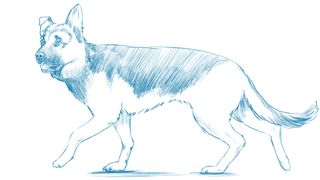
Today'due south tutorial volition show you how to draw a dog. The skeletons of dogs and cats are quite similar, specially in the simplified version drawn here. But information technology'due south important to remember that these animals move differently and expect very different from each other.
This tutorial volition accept y'all through the stride-by-step process of how to draw a dog. Nosotros volition be sketching an anatomically correct portrait of a German language Shepherd. This will start with sketches and move on to cartoon the skeleton, muscles and fur. Past the end, you'll be cartoon a canis familiaris with ease. For more advice, accept a expect at our roundup of tutorials exploring how to draw animals.
01. Notice in quick sketches
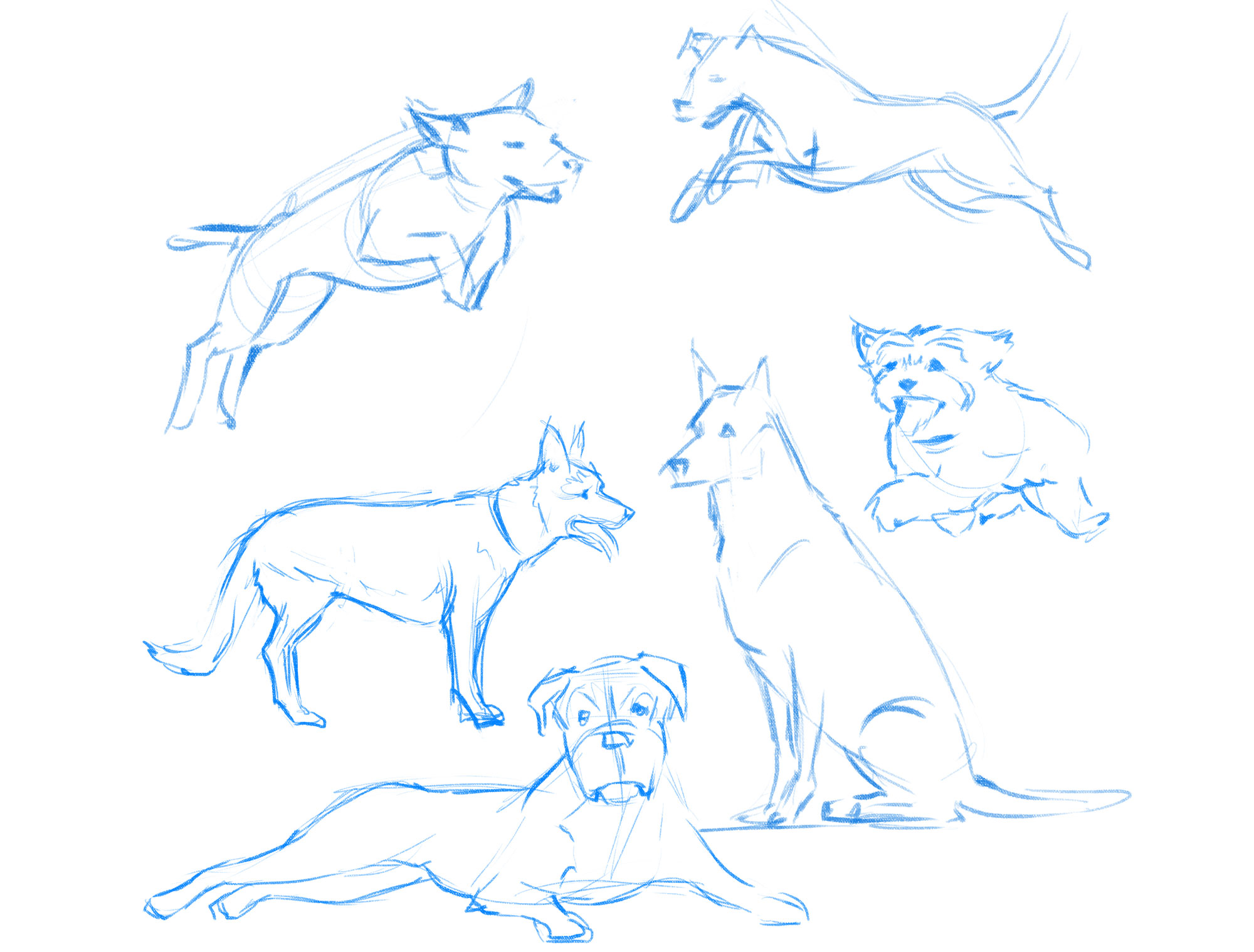
Many people – especially those who are new to art – disregard the sketching phase and consider it a waste matter of time. Often they will draw ane or ii sketches and call it a day. Information technology's very like shooting fish in a barrel to be tempted to speed up this phase. Later on all, details are much more fun to draw, aren't they?
The problem is, if we're too eager to get to the details, information technology'south easy to ignore the overall anatomy. And trust me on this: beautifully rendered fur on a creature that simply partially resembles a dog volition impress no ane.
If y'all own a domestic dog yourself, observe how they walk, run, jump, sit or prevarication down. You may think you know how they movement, but you actually won't until you consciously observe the animal. You lot can besides google some photos of dogs and use them every bit reference to quickly sketch different poses. Try not to spend time on details – the sketching phase is not most that.
02. Find the skeleton
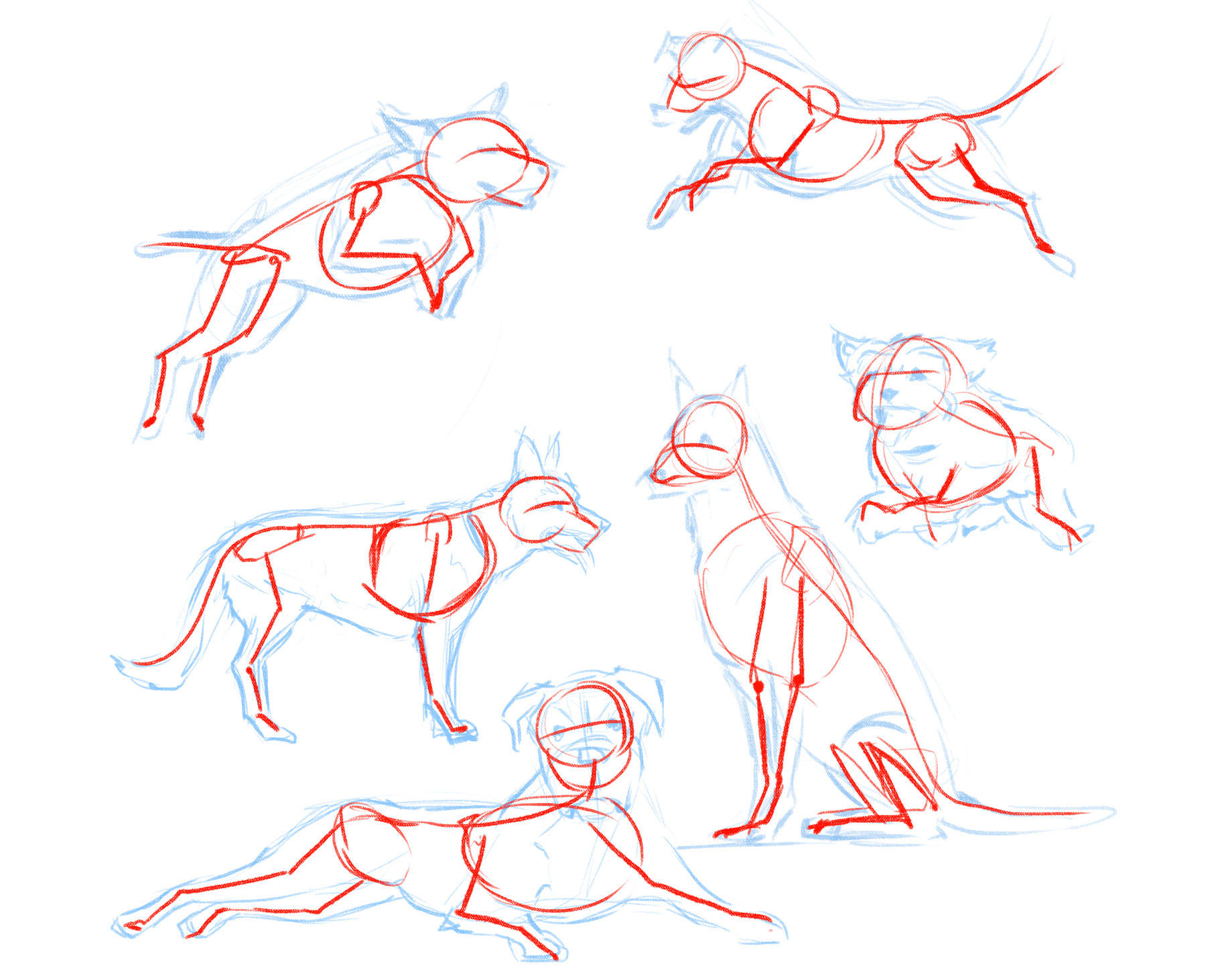
Focusing on the skeleton is a key part of mastering how to describe a dog. Fifty-fifty though in the cease no 1 is going to come across it, it's essential to understand the skeleton and be able to draw it in proportion. As you lot get more expert you may kickoff drawing the skeleton more loosely or maybe fifty-fifty exist able to skip this step altogether because by then the proportions will be engraved in your retentivity.
Before you lot move on to cartoon the skeleton in your chosen pose, a good exercise would exist to describe the construction on pinnacle of your previous quick sketches. This volition help you become more familiar with the idea of a skeleton underneath all that cute fur that dogs are covered in.
03. Draw the skeleton
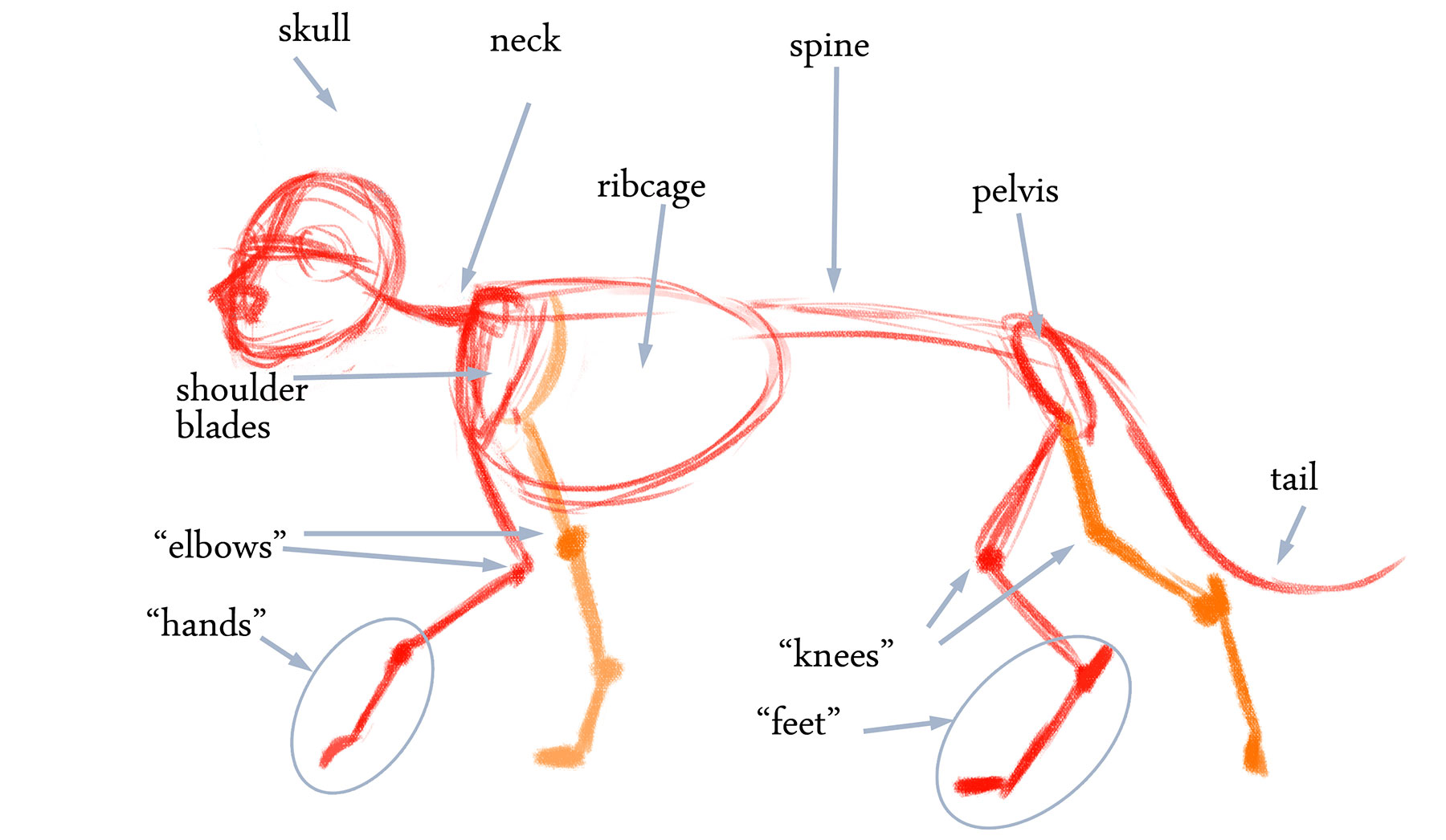
As you sketch dogs in dissimilar positions you will soon realise which one appeals to yous the most. Possibly yous'll choose to draw a canis familiaris napping, or sitting. This tutorial will utilize a walking pose as this shows the animal and its anatomy in the best possible way.
Loosely describe the skeleton of a dog in your called pose. A good tip is to draw the skull, ribcage and pelvis bone, and utilise single lines to indicate the spine, tail and limbs.
Dogs' skeletons have many similarities with human skeletons. You tin clearly see the equivalent of man knees, elbows, feet and easily. Dogs' legs are not that different from our arms and legs – the only existent difference is in the proportions of the bones.
If you wait closely you'll run into that dogs walk on the balls and toes of their feet, sort of like a woman in high heels. Notice how opposing forepart and back legs carrying most of the weight of the domestic dog. They are firmly placed on the ground, while the other 2 barely touch the floor.
If you work in traditional media, use very light strokes for the skeleton, so that you can erase it after. If yous work digitally, draw each step on a dissever layer.
04. Draw in the muscles
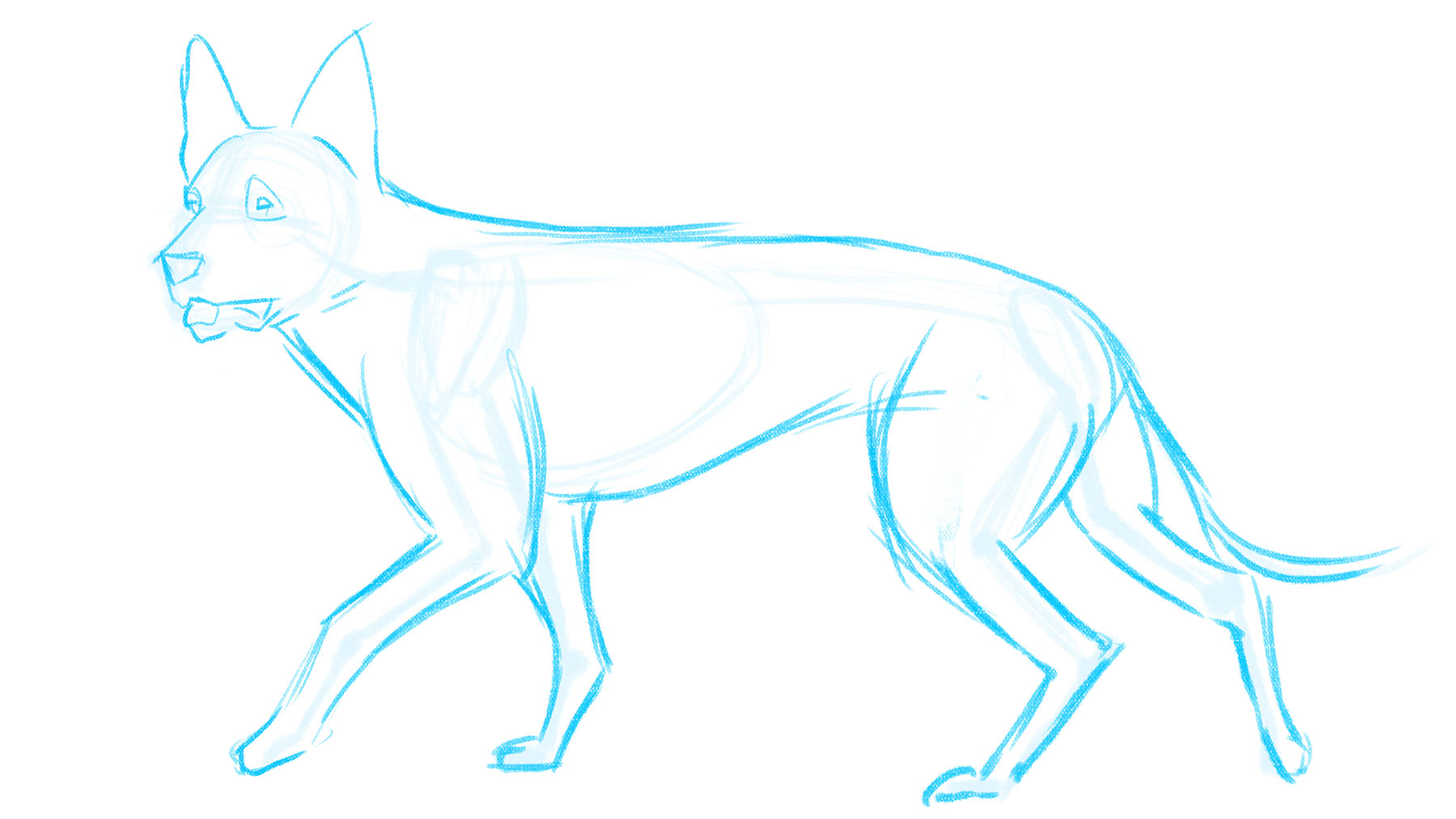
The point of this step is to constitute the anatomy beneath all the fur. German language Shepherds are not peculiarly fluffy, so the muscles will be visible through the outer coat. However, if you choose a breed such equally an Afghan Hound or Bernese Mountain Dog you lot'll confront a slightly bigger challenge finding the muscles nether all the fur.
It is important to understand how the muscles sit down under the skin. Understanding the general rules will requite you the tools yous need to draw any dog, regardless of the hair length.
05. Focus on the face
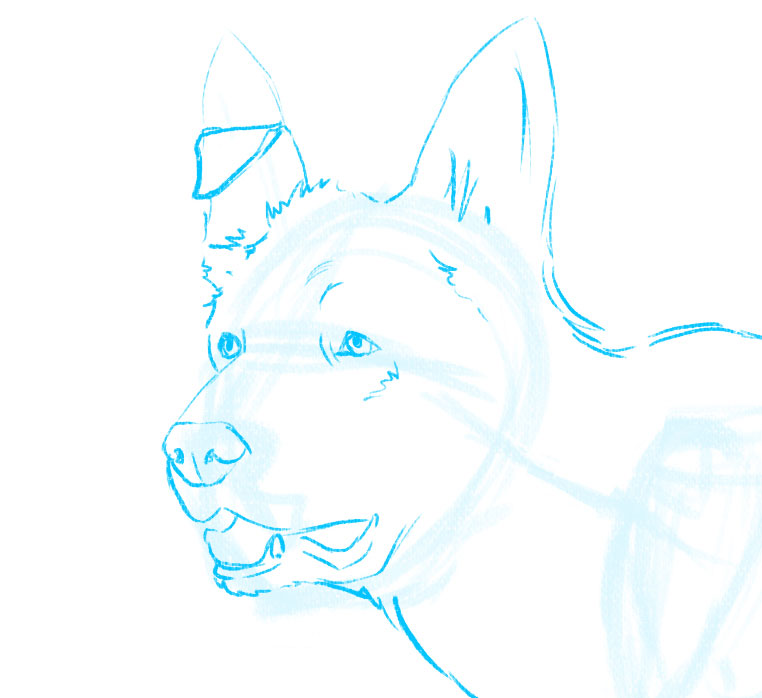
Now information technology'south time to refine the cartoon, beginning with the caput. We desire to start using stronger, more decisive lines at this point.
It'south very important to notice the correct position of the eyes. If you're drawing a dog's head directly-on, it'due south fairly piece of cake to maintain the right proportions betwixt the optics and nose. However, drawing the face in a slightly turned view tin exist much trickier. Non only are the eyes at present at a different angle, which changes their shape and size, only their position in relation to the nose besides changes.
It'south important to recollect that the eye that is farther abroad from the viewer will non be the aforementioned size as the one in the foreground. Perspective means the closer eye will be slightly bigger.
06. Draw in the muzzle
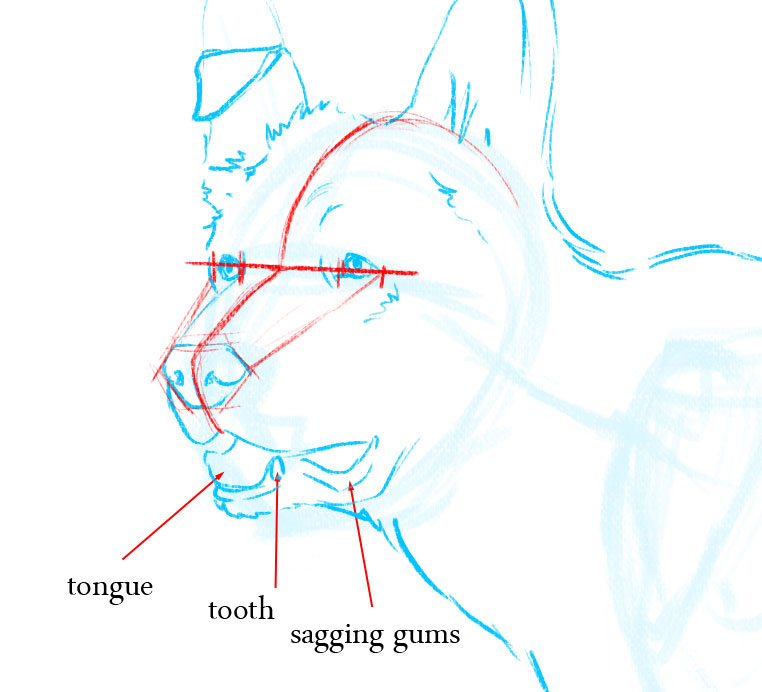
Similar many other dogs, German Shepherds accept quite long muzzles. Even pugs, which don't have prominent muzzles, don't take entirely flat faces. The length of the dog's muzzle volition vary depending on its breed, then brand certain to observe this advisedly.
Making the muzzle too long or also short will drastically alter the likeness of the dog. Remember that in a 3-quarter view, the muzzle will appear shorter.
Pay shut attention to the shape and size of the nose too. Virtually canis familiaris's noses look quite similar, but depending on the breed they can be bigger or smaller in relation to the residue of the caput. If the canis familiaris has an open oral cavity they will usually testify their teeth, gums and tongue, which is typically quite long and flexible.
07. Move on to the ears
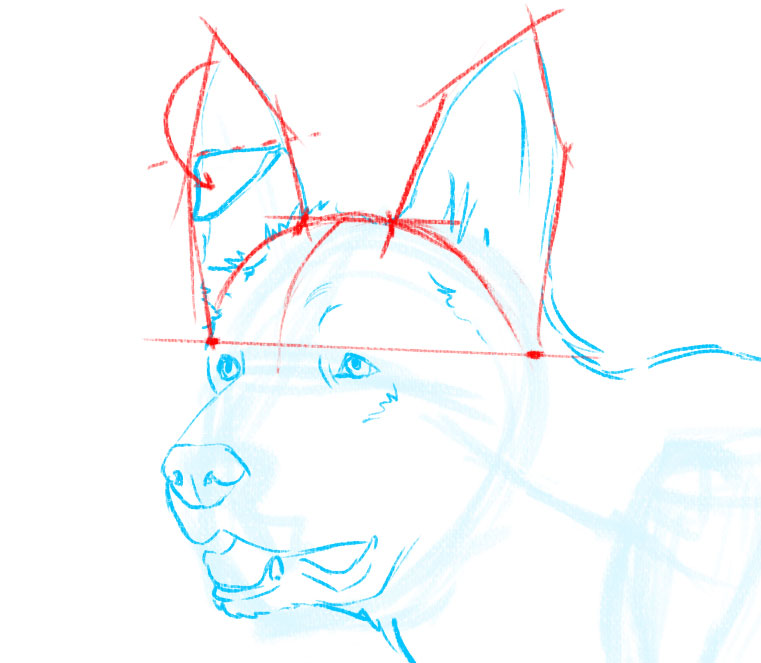
Every bit with the eyes, information technology is necessary to pay close attention to perspective when drawing ears. Observe the shape of the caput and how the ears are attached to it. The ears are more often than not a mirror image of each other, but even when painting uneven ears (some dogs accept one droopy ear, for example) they volition stay a consistent shape at their base. In this example one of the ears has been altered on purpose equally an example
08. Refine the trunk
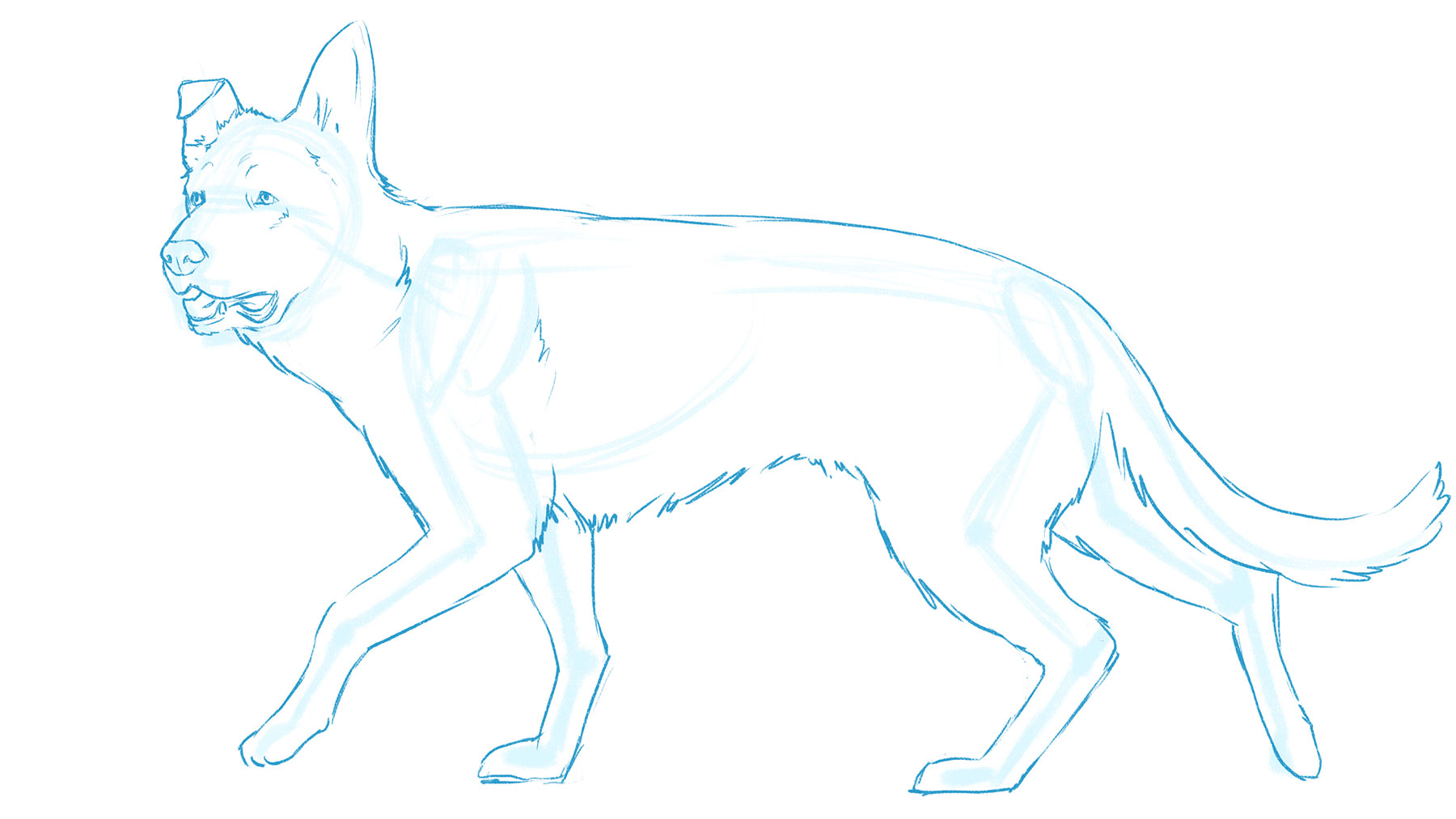
We already have a good idea of the musculature of the trunk, but on top of the muscles in that location is skin and fur. In some cases this can drastically change the look of the dog (retrieve about how different certain dogs can look after they've been groomed).
German Shepherds are however hairy in places, and then where necessary utilize smaller strokes to bespeak fur. The dog we're cartoon has thicker fur around its cervix, under its belly and on its tail, but on the balance of his body, peculiarly the head and legs, his hair is shorter. Avoid using the same kind of strokes all over unless it'due south a brusk-haired breed.
When you're washed, erase the underlying lines if working traditionally or turn off the skeleton/muscle layers if yous're working digitally.
09. Consider fur patterns
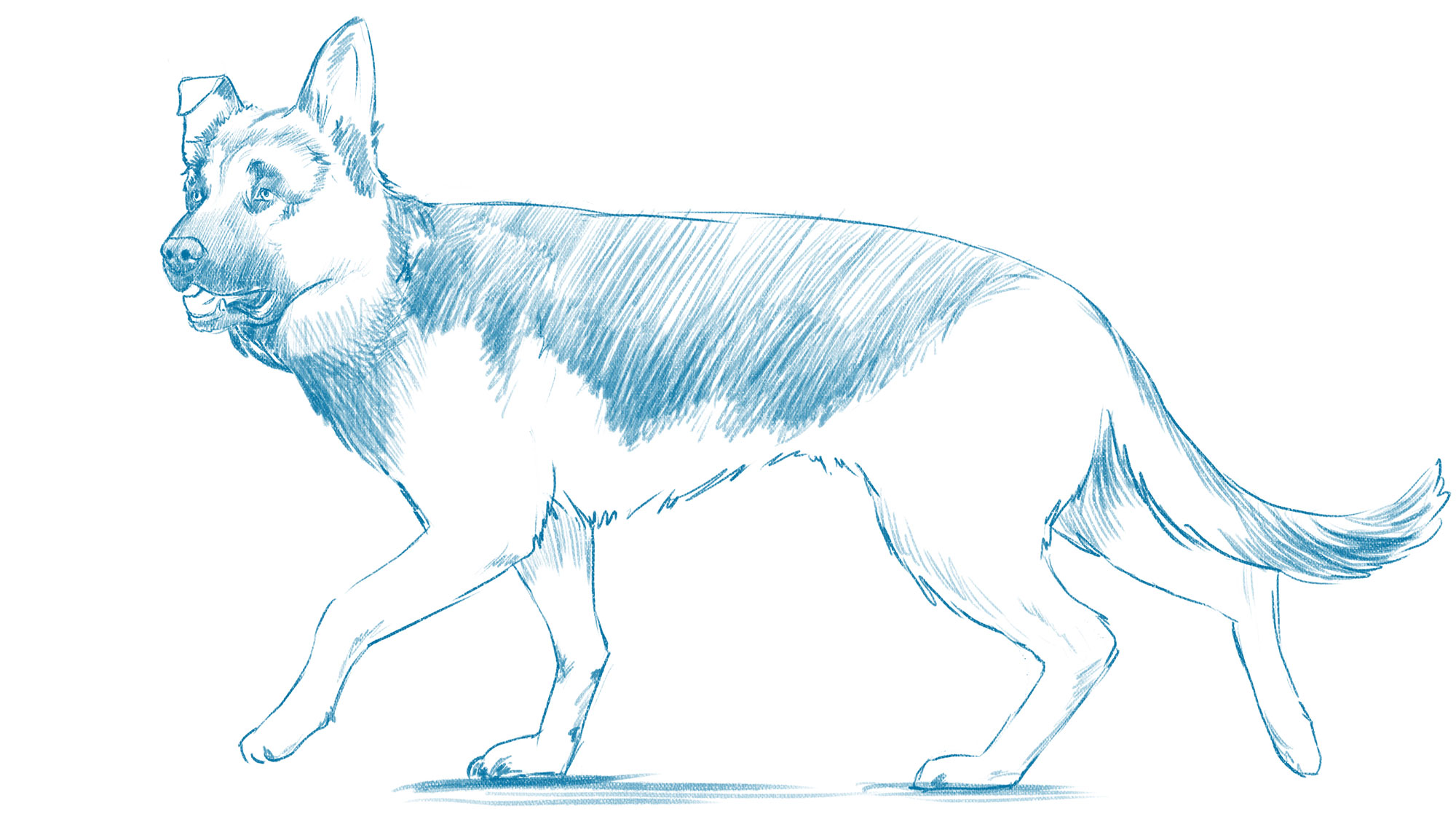
Every dog is a picayune different, and their colours can vary greatly. This tin can withal be shown even in a black-and-white sketch. Use varying pencil strokes when shading to ensure the coat blueprint doesn't look apartment.
This dog's hair is mainly brownish and blackness. It'due south non necessary to recreate all of the tonal values, then instead y'all could sketch in simply the black parts of the fur. A good tip is to use lighter strokes along the dog's dorsum to indicate a light source hit the fur.
10. Add together final touches

Finally, add some subtle strokes forth the dog's legs to requite a suggestion of muscles showing underneath the fur. The idea is to convey enough data to give the dog character without having to shade the entire silhouette. The last touch is to add some shadows under the paws and voilà – y'all drew a dog!
If you want to learn more, you could check out how to depict a pencil portrait of a dog or find a guide to drawing a domestic dog's muscle groups.
Read more:
- The best pencils for colouring, cartoon and sketching
- How to draw: The best drawing tutorials
- The 12 best drawing books
Related articles

Source: https://www.creativebloq.com/how-to/draw-a-dog
Posted by: pizzosament1964.blogspot.com
0 Response to "How To Draw A Dog From The Word Dog"
Post a Comment