

Answer Key To Mathematical Equivalents Used To Pharmacology
Fractions
A fraction is a part of a whole, that is, fractions are a way of dividing a whole unit into parts. For example, think of dividing a small cherry pie into equal parts for friends after dinner. Four people want dessert, so you can divide the pie into four equal parts; each person receives  of the pie. If only three people want dessert, you can divide the pie into three equal parts; each person receives
  of the pie.
The top number in a fraction is the numerator, and the bottom number is the denominator. In a proper fraction, the numerator is smaller than the denominator. If we go back to the pie example,  and
and  of the pie are proper fractions.
In improper fractions, the numerator is equal to or greater than the denominator. Another way of looking at improper fractions is that the numerator is so large that it is equal to or greater than 1. For example, the improper fraction  is greater than 1. It is equal to
  (the entire pie that was cut into 4 pieces, or 1 whole pie) plus
  of another pie. Therefore, if you wanted everyone to have
  of a pie for dessert, you would need two pies: one whole pie for four guests (
 ) and
) and  of another pie for yourself (
 pies). To convert improper fractions into whole numbers, divide the numerator by the denominator. In this case, you need
  of pie: 5 + 4 =
  pies.
pies.
Review the following examples. Identify the proper and improper fractions. If the fraction is improper, perform the math to get the whole number equivalent.
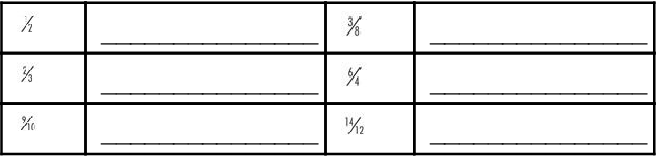
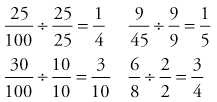
Fractions typically are written in their lowest terms. For example, can you reduce the fraction  to its lowest term? To reduce a fraction, you must divide the numerator and the denominator by the largest number that goes into each equally. In the case of
  , 5 divides into 15 three times, which means that
  can be reduced to
  . Other examples include the following:
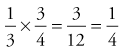
In some cases, you may have to multiply fractions. For example, let's say you want to multiply  of the contents of one bottle times
  of the contents of another. All you have to do in this case is multiply the numerators and denominators of each fraction and reduce the answer to its lowest terms. For example:
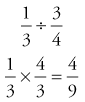
To divide fractions, you must invert the divisor (the second fraction) before you multiply the numerators and denominators. For example:
Answer Key To Mathematical Equivalents Used To Pharmacology
Source: https://nursekey.com/pharmacology-math/
Posted by: pizzosament1964.blogspot.com
0 Response to "Answer Key To Mathematical Equivalents Used To Pharmacology"
Post a Comment